“I’d like to speak to you about my son…”
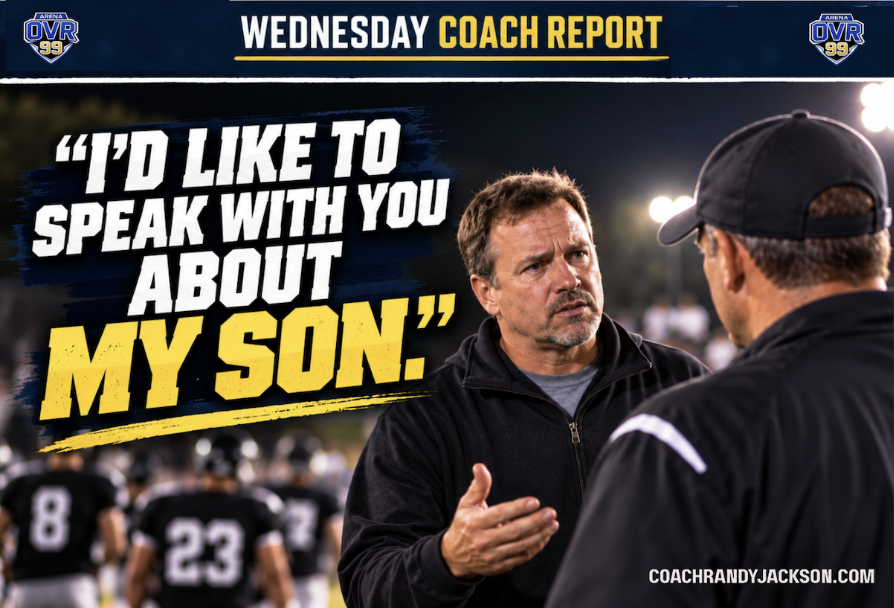
The game is over. You're walking off the field, and here comes a parent.
You know the look.
We've all seen it more times than we'd like to remember. That determined walk, the forced smile, and the frustration they're trying not to show. Before they say a word, you already know what's coming.
"Coach, you got a minute? There are a few things I'd really like to visit with you about."
And we all know that "a few things" probably aren't compliments about your play-calling!
Your response?
"Absolutely. Shoot me an email, and we'll find a time to sit down next week."
If you've been a head coach very long, you've had this conversation. Probably more times than you care to count.
I've heard coaches say, "I don't meet with parents about playing time."
I don't agree.
Over my 23 seasons as a head coach, I was willing to meet with parents about ANY subject, including playing time.
But we had a system in place, explained at our preseason parent meeting.
RULE #1: Never Meet With a Parent After a Game.
Win or lose, immediately after a game is not the time for these conversations.
Emotions are high, parents may be frustrated, and you've just spent several hours coaching.
Be polite, professional, and don't get drawn into a discussion.
When the parent emails or calls, don't immediately schedule the meeting.
"I'd be happy to visit. Let me check my schedule. Before we set a time, could you tell me what you'd like to discuss so I can be prepared?"
Never allow a parent into your office without knowing why they're there.
If the parent is upset or frustrated, don't rush to schedule the meeting. Give everyone a few days to cool off. Tuesday or Wednesday is usually a good time. And if it's about playing time (isn't it always? ), those extra days can make a big difference in having a productive conversation.
RULE #2: The Athlete and Position Coach Must Attend.
Raise your hand if you've heard this one:
"Coach, I don't want Tommy to know we're up here talking to you."
BONK!
That's why you explain this policy at your preseason parent meeting.
If we're discussing playing time, Tommy needs to be there. So does his position coach.
If Tommy believes he deserves more playing time, he obviously doesn't understand what his coaches need to see from him.
And that's exactly what we need to discuss!
I'm not interested in spending 30 minutes explaining why Tommy isn't playing or telling him he's not capable.
Keep the conversation positive and matter-of-fact.
"Tommy, here's what we need to see from you in practice to earn more playing time on Friday night."
Maybe it's assignments, technique, physicality, or consistency. Whatever it is, be specific.
The goal isn't to tell Tommy why he's on the bench. It's to show him how to get off it.
RULE #3: Playing Time Is Earned in Practice.
Eventually, Dad may ask:
"Coach, why don't you just give him a chance in the game and see what he can do?"
My answer?
"That's what practice is for."
We evaluate players Monday through Thursday. Their effort, execution, assignments, consistency, and ability to help our team.
Friday night isn't where we find out if a player is ready. Practice is where he proves he's ready.
And never discuss another player's ability or playing time. Keep the conversation focused on their child.
The goal isn't to convince a parent why their son isn't playing. It's to explain what their son needs to do TO play.
I want that player leaving encouraged, not defeated.
No promises. No debating the depth chart.
Just a clear path forward.
Being accessible to parents doesn't mean compromising your standards. It means communicating them.
And remember, explain your meeting policy at your preseason parent meeting, not after a Friday night loss.
HEAD COACHES — WHAT'S YOUR POLICY?
Do you meet with parents about playing time? Do you require the athlete and position coach to attend?
I'd love to hear how you handle these conversations.