Practice is Over Now Comes the All-Important Meeting
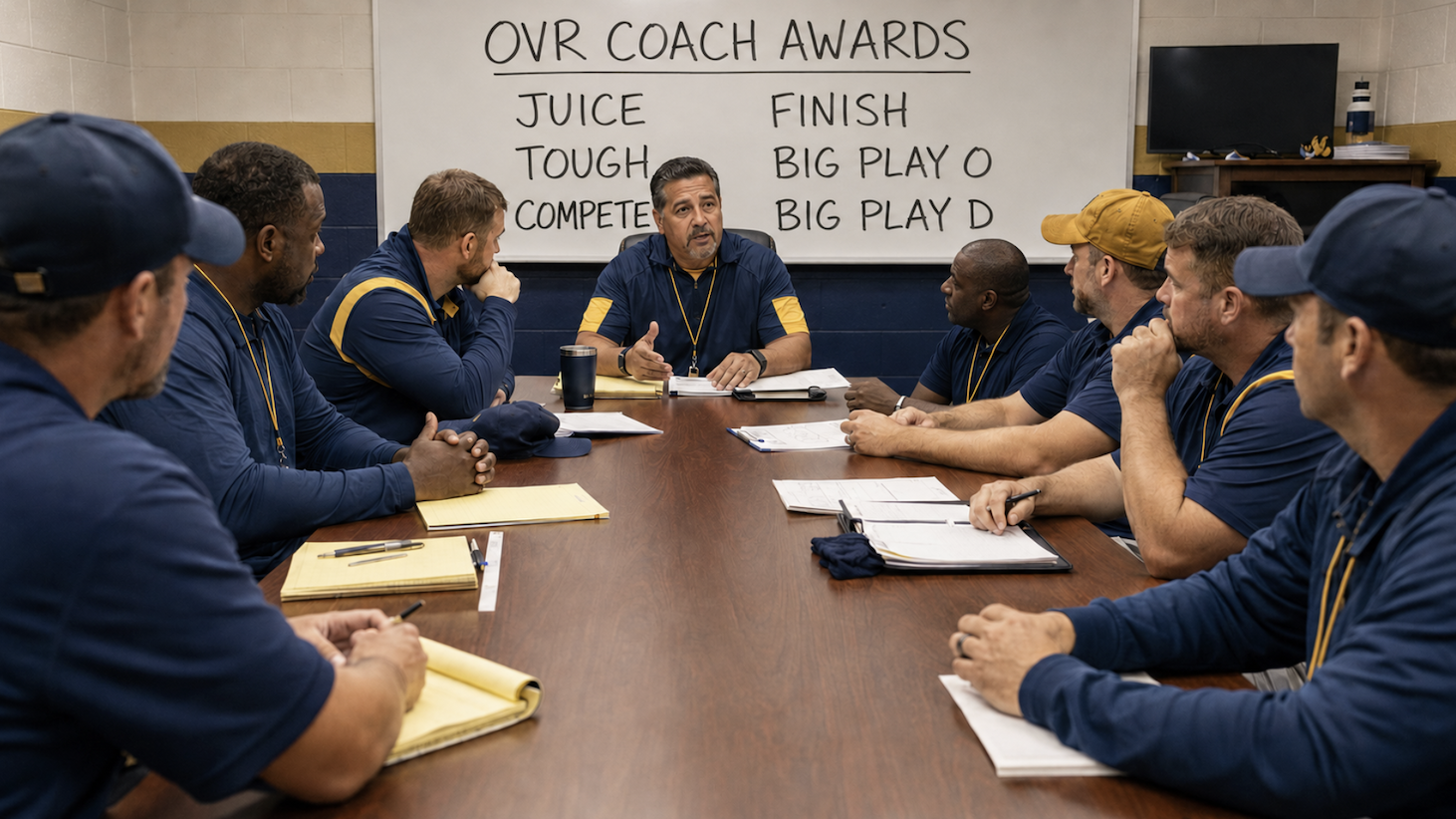
The Absolutely, Positively Mandatory Post-Practice Meeting
Congratulations! You have the best job in the world.
I loved being on the field, but I also enjoyed our post-practice staff meetings. That’s where we evaluated the day, solved problems, celebrated players and made tomorrow better.
Especially early in the season, spend at least 20–30 minutes with your entire staff after practice. We met as a full staff before the offensive and defensive staffs separated to watch film and prepare for the next day.
Here is a story-form version of a typical meeting I conducted. I hope you find a couple of ideas to use tomorrow.
Everyone is tired. There’s film to grade, practice to plan and a hundred other things demanding your attention.
But the post-practice meeting is mandatory. Those 20–30 minutes keep small issues from becoming big problems. They protect your players, align your staff and reinforce your standards.
Practice may be over, but the work of improving your program isn’t.
Here is what our Day 1 post-practice meeting might have sounded like.
The players had left. The field was being picked up, the locker room was settling down and the staff gathered around the conference table.
“Okay, guys, thanks for a great Day 1.
“Remember, Day 1 energy is easy. Everyone was excited today. Tomorrow, the legs will be a little heavier and the newness will begin wearing off. The energy our players bring tomorrow will depend on the energy we bring.”
I. Begin With Player Health
I turned first to our head athletic trainer.
“Coach Smith, how was our health today?”
Bring your trainer into the meeting for the first few minutes. I had already checked on Marcus’s hamstring during practice, but I wanted the entire staff to hear the report.
“Did anyone miss taping or rehab who needs some tough love? Is there anyone we need to limit tomorrow? Are there any hydration or heat concerns we need to address?”
Once the trainer gave his report, we thanked them and allowed them to leave.
II. Discuss Attendance
“Was anyone missing from your position group today—varsity or JV? If so, do we know why, and who is contacting him tonight?”
Establish your culture and standards immediately.
Don’t allow your “stars” to get away with something you wouldn’t tolerate from everyone else. Your core team members see it, and they will resent it.
I always had a 'grim reaper' who handled excused/unexcused absences. This is a BIG DEAL and must be part of your 'daily fist-fight.'
*“Who wasn’t here today—and who will personally speak with him about being here tomorrow?”
It will usually be a sub-varsity player. Don’t take the attitude, “If he wants to play, he’ll show up.”
Go find him.
Show him that he matters.
Sometimes, we would send two coaches to his house to visit with him and his parents.
He may not receive that kind of care anywhere else—and it could change his life, as well as your season.
III. Review Special Teams
“Coach, we emphasized punt today. What did you like? How did the operation look? Is there anything we need to adjust with our personnel or teaching?”
Then we turned toward tomorrow.
“Which kicking unit will be our focus?”
“Punt pressure.”
“Good. Make sure the personnel, organization and teaching points are ready before we take the field.”
IV. Evaluate Today’s Practice
“Defensive coaches, what did you like today and what needs to be fixed?"
“Offensive coaches, what did you like and what needs to be fixed?"
“Here’s my take from the notes I made on the field. We were okay moving from drill to drill, but some of us started coaching before everyone had arrived."
“Do not allow a player to mall-walk to a drill. Do not begin teaching until every player has his feet set and his eyes locked in.”
Then came something every coach who has worked for me can mark off his bingo card:
“Every play in a game ends with a whistle. Use a whistle to end your drills. We’ve discussed this before. I know some of you aren’t down with it—but get down with it ASAP. It’s one of my things.”
V. Score and Celebrate the Day
“Now let’s do our OVR scoring. On the whiteboard, write down one player you coached who earned a +1 and one player you didn’t coach who earned a +1. Be prepared to tell us what each player did to earn it.”
Requiring coaches to recognize someone outside their position group forces them to watch the entire team—not just their own players.
“Now let’s get nominations for our OVR Coach Awards:
“Who brought the Juice?
“Who competed?
“Who showed toughness?
“Who finished?
“Who made the Big Play on offense?
“Who made the Big Play on defense?”
Don’t just give us a name. Tell us what the player did.
“As you know from the summer, our players will be checking their OVR feeds tonight to see who won. Coach Johnson, you’re responsible for posting today’s awards before you leave.
“If someone from your unit earns a Coach Award, recognize and congratulate him in your unit’s chat group. Make the recognition matter—what we celebrate gets repeated.”
VI. Give Feedback Without Slowing Practice
“One more reminder: Give feedback after every play—but don’t allow your coaching to slow down practice.
“Don’t take a player out and then stand there coaching him while the player who replaced him receives no feedback. We’re filming practice. This isn’t your only opportunity to coach the mistake.
“Your eyes and your voice must stay with the players on the field. When they do something well, celebrate it. When something needs correcting, give them a quick correction and tell them, ‘We’ll fix it together.’
“Coach the last play—but be ready for the next one.”
There is never a time on the practice field when a coach gets to take a mental break.
Engage. Encourage. High-five players. Bring the juice.
Your players should believe that coaching them is your favorite part of the day.
“During warmups, two coaches were discussing what coverage the offense needed to see. That conversation should happen before we walk onto the field. Once practice begins, our complete attention belongs to our players.”
VII. Review Post-Practice Work
“Did the players’ post-practice weights and film study go smoothly? Did both start on time? Did we accomplish what we wanted? Does anyone have a suggestion for improving either one tomorrow?”
Don’t ask only whether something happened. Ask whether it worked.
VIII. Preview Tomorrow’s Install
The post-practice meeting should not only review today. It should prepare everyone for tomorrow.
“Offensively, we are going to repeat the same plays tomorrow. We’ll add only a couple of tags.”
The offensive coordinator stood and drew the tags on the whiteboard. Every coach saw them, understood them and had an opportunity to ask questions.
Then I turned to the defensive coordinator.
“What are we running tomorrow?”
He reviewed the calls and drew them on the board.
“Reminder, aren't trying to trick the other side of the ball. Give each other the looks we need. Our objective is to help both sides improve—not to win tomorrow’s team period in the meeting room tonight.”
IX. Reminder about Post-Practice Responsibilities
“Today, the defensive staff had locker-room duty. The offensive staff picked up the field and stayed outside with the players who wanted extra work. Tomorrow, we switch.”
Locker-room duty is more than supervision.
“If you fussed at a player today, find him in the locker room. Put your arm around him and remind him that you love him. Make sure he understands that you corrected him because you believe in him."
“Pay special attention to the JV players. They can feel invisible during fall camp. Make sure they know we see them.”
X. Handle Tomorrow’s Details
“Coach Williams, how did the drone work for video? Is there anything we need to fix before tomorrow? Are we good for filmers tomorrow?"
“And I know you guys love hearing this, but our fundraiser begins Thursday. We will draft our squads on Wednesday, so have your information ready.”
Before dismissing the full staff, I asked three final questions:
“Is there a player who needs a phone call, text or private conversation tonight?”
“What is the single biggest adjustment we need to make tomorrow?”
After the full-staff meeting ended, the offensive and defensive staffs separated for their own brief meetings. They reviewed the film, finalized the next day’s installation and made sure every coach understood his assignment.
Then we went home.
Head coaches, this is probably another email, but our staff meetings also had assigned seating and a no-cell phone rule.
We laughed. We enjoyed being together. But it was business.
Practice doesn’t end when the players leave.
The post-practice meeting is where you protect your team, align your coaches, reinforce your standards and begin building tomorrow’s practice.
Give it at least 20–30 minutes.
Your program is worth it.