“coach, I’m pulling my son from football.”
Before You Let Dad Pull Him From the Team...
I already had this week's Coach Report planned.
Then yesterday morning I got a text from a head coach.
I read it and immediately thought:
Well...I guess we're pivoting. This needs to be Wednesday's Coach Report.
Here's basically what he told me:
"One of his starting offensive linemen is a junior. Good kid. Not in serious trouble—just doing some of the things normal teenage boys sometimes do that drive their parents crazy."
Dad is frustrated enough that he's considering pulling his son out of football completely.
The coach asked me:
“What would you say to his dad?”
My first thought was...
Don't sell Dad on football. Show him why his son needs what your football program provides—structure, accountability, relationships and adults who will help him grow up.
Show Dad how the people in your football program are going to help him raise his son.
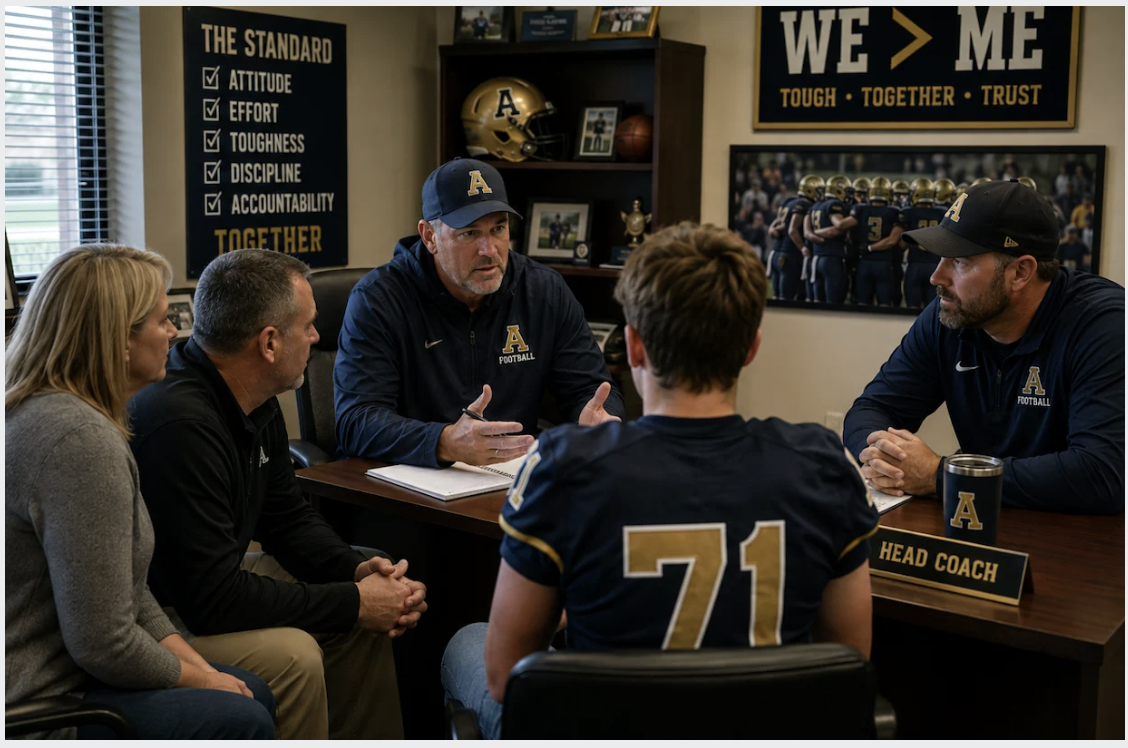
1. Get Everybody in the Same Room
I'd set up a meeting.
Mom and Dad.
The player.
Head coach.
Position coach.
And I'd tell the parents:
“I understand why you're frustrated. I've been in situations like this before, and I'm not going to tell you how to parent your son. But before we take football away, what if we sit down together and make a plan?”
“Let's get you, your son, his position coach and me in the same room. We'll talk about what you're concerned about, what you need from him at home, what we need from him at school and football, and then let's build a plan together to help him get back on track.”
“We'll embrace him, we'll hold him accountable, and we'll work alongside you. Let's put as many good adults around this young man as we can and help him succeed.”
That's a lot different than:
“Please don't take my starting left tackle away.”
This isn't about Friday night.
It's about the kid sitting at the table.
Then I'd turn to him:
"Your parents love you enough to hold you accountable. Your coaches care enough about you to get involved. We're all on the same team now.
"But you've got responsibilities too."
Then I'd put a blueprint on the table.
2. Give Dad a Real Plan
Don't just tell Dad:
“Football will be good for him.”
Tell him exactly what you're willing to do.
“If his grades start slipping, he's not just going home after practice. He's going to stay and get tutoring or work on what he's behind on before he leaves.”
And I'd make the classroom part of the plan.
“His position coach and I are going to check with his teachers every week. Not just about grades. We're going to ask about his effort, attitude and how he's carrying himself in class.”
His position coach becomes his daily point man.
Maybe the player checks in with him every morning. Maybe they spend two minutes together after practice. Maybe the position coach sends Mom or Dad a quick update once a week.
Think about the accountability around this young man:
Parents + Teachers + Position Coach + Head Coach.
And he knows they're all communicating.
Now you're not asking Dad to overlook his son's behavior because you need your starting left tackle Friday night.
You're saying:
“Let football become part of the solution.”
3. Don't Automatically Remove His Best Accountability System
I've watched this happen for years.
Kid screws up.
Parent gets frustrated.
First response:
“You're done with football.”
I understand the thinking. Football matters to him, so taking it away gets his attention.
But you're also potentially removing structure, accountability, teammates who expect him to show up, something he cares deeply about and multiple adults who see him every day.
At the exact moment this young man needs more good adults in his life, are we sure we want to remove him from some of them?
Obviously, there are serious situations where a young man hasn't earned the privilege of participating.
That's different.
I'm talking about a good kid who's struggling with being a teenager.
Maybe football isn't something we take away. Maybe football is something we use.
4. Position Coaches, This Is Part of Your Job Too
Head coaches can't do all of this themselves.
That's why your assistant coaches matter so much.
A position coach doesn't just coach the left tackle's kick step.
He coaches the left tackle.
There's a difference.
Know his grades. Know what's happening at home. Know what his teachers are saying. Celebrate him when he's doing well and get on him when he's slipping.
We're not replacing parents.
We're partnering with them.
Sometimes your position coach may have more daily face-to-face time with that young man than almost any other adult in his life.
Don't waste that influence.
5. But Coach, You Better Mean It
You can't sit across from Mom and Dad and say:
“We're going to help you with him.”
...and then forget about it once practice starts.
If you tell Dad you'll check with teachers every week, check with them.
If you promise tutoring when grades slip, make sure it happens.
If you're asking that parent to trust you, earn the trust.
And don't only contact the parents when something goes wrong.
Imagine Dad getting this text from the position coach:
"Your boy had a great day today. Worked his tail off and was a great teammate. Just wanted you to know."
That's how you build a partnership.
6. Help Raise Him
I originally told the coach who texted me:
“Tell the parents you'll be his school dad.”
But the more I've thought about it, I'd make it bigger than that.
Tell the parents:
“We're going to help you raise him.”
Not replace them.
Help them.
For the hours he's entrusted to us, we're going to reinforce the same things you're trying to teach at home.
Responsibility. Accountability. Work ethic. Respect.
And I'd look that young man right in the eye:
“Your parents aren't letting you off the hook by allowing you to play football. They're actually putting MORE accountability around you. We're going to love you. We're going to help you. And we're going to stay on you. But you've got to do your part.”
Sure, we're going to teach inside zone, fix his stance, get him stronger and try like heck to win Friday night.
But sometimes we're reminded what this profession is really about.
We aren't just coaching somebody's son.
For a few hours every day, they've entrusted us to help raise him.
Embrace that responsibility.