“Everyone Knows the Standard… So Why Did Our Culture Slip?”
This morning I spoke with a coaching client who voiced something I’ve heard many times over the years.
“Coach… we don’t get it. Every one of our players knows the standard. But our culture still slipped this season. Last year we had a core group of guys who stepped up, fixed things, and held the line. This year… not so much.”
My answer was simple:
Knowing the standard and upholding the standard are two different things.
No organization—no football program, no business, no school—has every person operating at an elite level. It doesn't work that way. Culture is not sustained by the whole group. It’s sustained by a small group inside the group.
Why “Everybody Knows the Standard” Isn’t Enough
When you teach only to the whole team, everyone hears the message…
but nobody feels personally responsible for protecting it.
Even the 1% of programs who run daily team meetings have to go one step further—
they need a circle of trusted athletes who are brought close, mentored deeply, and empowered to lead.
These are the athletes who don’t just “know the standard.”
They defend it, enforce it, and uphold it when the coaches aren’t around.
The CPR Analogy: Why Specific Leadership Matters

An athletic trainer told me something years ago that I’ve never forgotten.
He said if you’re on a busy city sidewalk doing CPR and you look up at the crowd and yell:
“Somebody call 911!”
…there’s a good chance nobody moves.
Not because people don’t care.
But because everyone heard it, which means everyone assumes someone else will handle it.
“Someone else has it…”
“Someone else will step up…”
“Someone else will take action…”
But if you stop, point at one person, look them in the eyes and say:
“YOU — call 911.”
Everything changes.
Now that person feels responsibility.
They feel chosen. You asked them.
So they ACT.
And that right there is why every program needs a Leadership Council.
If you expect your entire team to carry the culture, it’s the same as yelling into a crowd:
“Somebody uphold the standard!”
We all know how that turns out.
But when you bring 8–12 athletes in close…
When you point at them, choose them, invest in them, and give them a voice…
Responsibility goes through the roof.
They act because you asked.
They lead because they were chosen.
They protect the standard because it feels like their job—not “someone else’s.”
Another Way to See It
Put yourself in the shoes of your next Leadership Council.
Imagine your school district just received its yearly state ratings, and for the first time anyone can remember… the rating slipped.
It’s below the standard, and things need to change.
The superintendent doesn’t call an assembly of 4,000 students and teachers and say,
“We need to get better.”
No.
They form a small group.
A task force.
A circle of trusted people who meet weekly or twice a month…
Who talk honestly…
Who share ownership of the solution.
Now imagine YOU get invited to that group.
Holy cow—your heart would explode.
You’d be thinking:
“I must matter. They must see something in me. I’m being trusted to help turn this around.”
You’d feel honored.
You’d take pride in being in the room.
You’d lean in because you weren’t just talked at—you were brought inside.
Your athletes feel the exact same way.
How Often Coaches Should Meet With Their Council
During the season, I tell coaches:
Spend 30–45 minutes each week with your Leadership Council.
In the offseason, you don’t need to meet as often—
twice a month is enough to keep the connection strong and the conversations meaningful.
But here’s the key:
It can’t just be time spent… it has to be time they look forward to.
Meet after school if that works for your schedule. That way they’re not thinking about the day ahead or rushing off to class.
Have a few snacks, some drinks, make the setting relaxed. But most importantly:
Ask them questions. Get them talking.
Do not do most of the talking yourself.
If you dominate the conversation, they won’t look forward to these meetings—and you’ll miss the whole point.
When players feel heard, they open up.
When they open up, they grow.
And when they grow, your culture grows with them.
This group becomes the layer between your staff and your team—
the bridge, the translators, the force multipliers.
And none of that happens if your only leadership strategy is talking to the entire team at once.
Culture Thrives When Responsibility Gets Personal
If you want athletes to truly own your culture, give them:
A group — a defined Leadership Council
A curriculum — a roadmap to grow them
A voice — real dialogue, not just speeches
Culture doesn’t slip because players don’t know the standard.
Culture slips when no one feels personally responsible for protecting it.
So choose your small group.
Bring them in close.
Grow them on purpose.
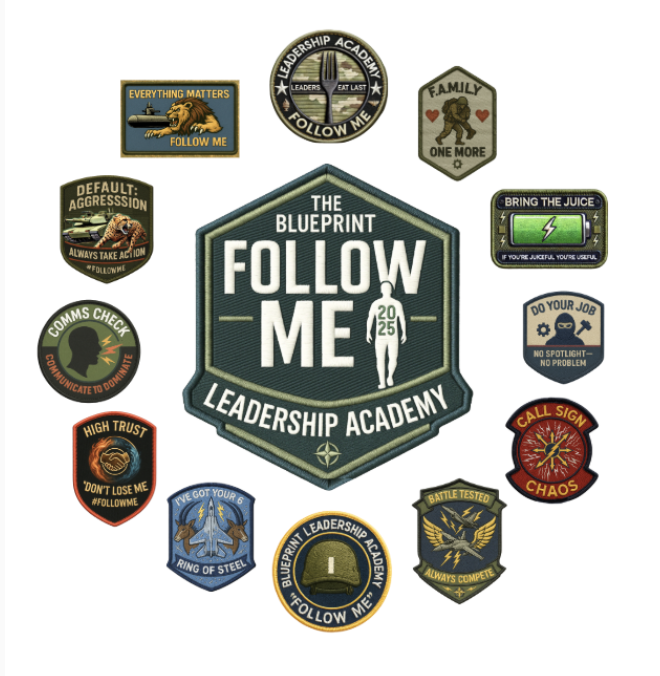
And if you want a plug-and-play system to guide those meetings, The Blueprint Leadership Academy can help you do exactly that. You’ll be the facilitator—but they’ll do most of the talking— and I promise, it will become the best 30 minutes of your week.
Because “somebody call 911” rarely moves anyone—
but a chosen few will change everything.